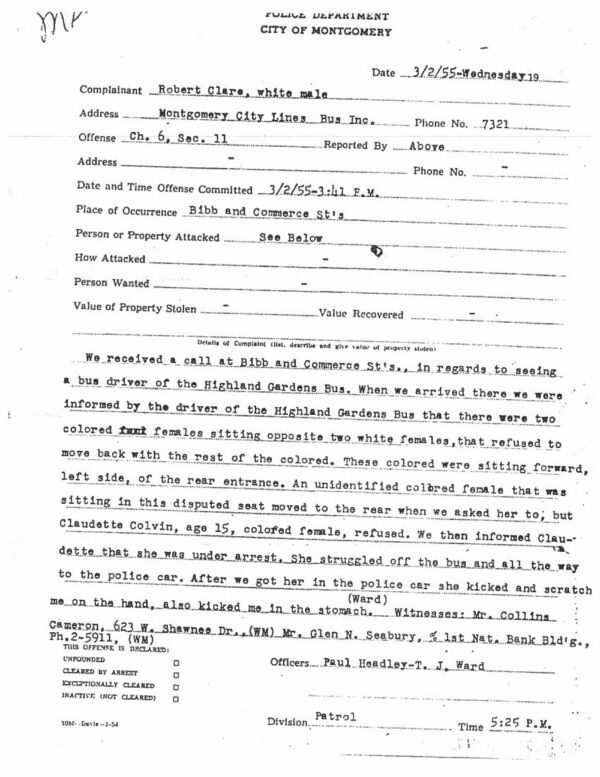
Hidden Heroes: Uncovering Claudette Colvin’s Role in Changing History
Explore the activism of youth civil rights leader, Claudette Colvin, and how she contributed to the advancement of the Civil Rights Movement.
Lesson Plan
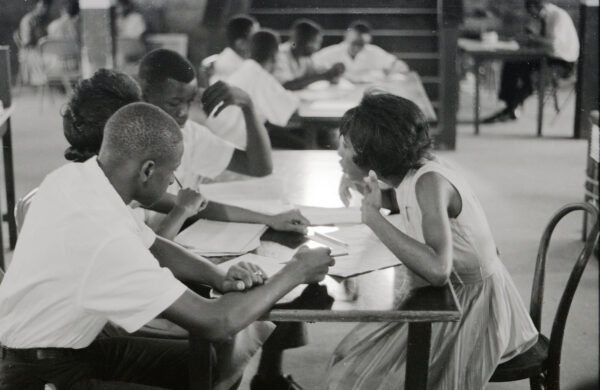
Learn how students were the driving force behind much of the Civil Rights Movement of the 1960s through music, interviews, and more.
In this lesson, students will do a comparative analysis of how the philosophies, methods, and tactics used by youth organizations and organizers began to change after their time organizing voter registration in Mississippi. Students will listen to and analyze primary source audio recordings of youth organizers to gain their perspective on how their work in Mississippi changed their philosophies toward civil rights organizing.
Eleventh, Ninth, Tenth, Twelfth
Civics, Social Studies, US History
180 minutes
Three 60-minute class periods
Activities, Background Essay, Biographies, Glossary, Primary Sources, Rubric, Secondary Sources, Timeline
At the end of this lesson students will be able to:
It will be helpful for students to be familiar with:
Georgia
SSUSH21: Analyze U.S. international and domestic policies including their influences on technological advancements and social changes during the Kennedy and Johnson administrations.
L9-10RHSS2 and L11-12RHSS2: Determine the central ideas or information of a primary or secondary source; provide an accurate summary of how key events or ideas develop over the course of the text.
L9-10RHSS6 and L11-12RHSS6: Compare the point of view of two or more authors for how they treat the same or similar topics, including which details they include and emphasize in their respective accounts.
L9-10RHSS9 and L11-12RHSS9: Compare and contrast treatments of the same topic in several primary and secondary sources.
L9-10WHST1 and L11-12WHST1: Write arguments focused on discipline-specific content.
L9-10WHST7 and L11-12WHST7: Conduct short as well as more sustained research projects to answer a question (including a self-generated question) or solve a problem; narrow or broaden the inquiry when appropriate; synthesize multiple sources on the subject, demonstrating understanding of the subject under investigation.
Action that seeks to achieve an end directly and by the most immediately effective means (such as a boycott or strike).
A ride made by civil rights workers through states of the southern U.S. to ascertain whether public facilities (such as bus terminals) are desegregated.
Sign in
or
create a free account
to access the full lesson plan and more.
Explore the activism of youth civil rights leader, Claudette Colvin, and how she contributed to the advancement of the Civil Rights Movement.
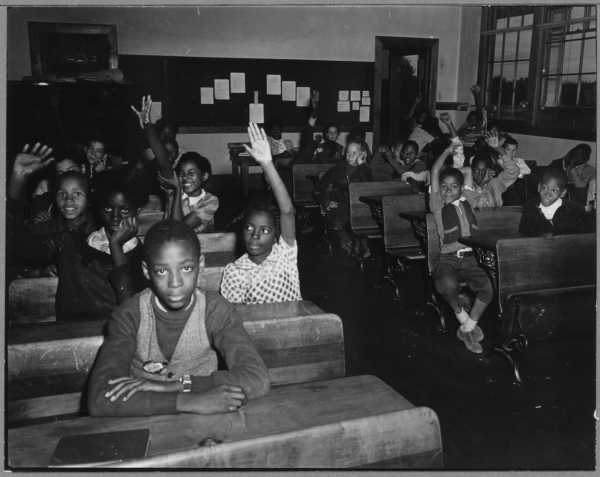
Students explore Investigation Stations to better understand the pivotal Brown v. Board of Education case that recognized the human and civil rights of all students by declaring school segregation unconstitutional.