Lesson Plan
Push, Pull, and Perseverance: The Great Migration Experience
About this lesson
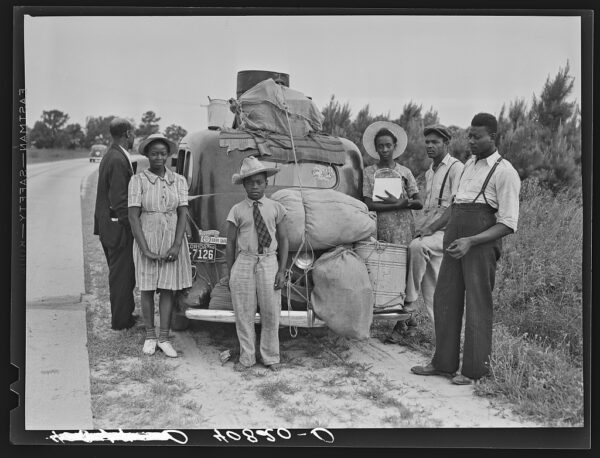
Following the Civil War, millions of African Americans left the South for urban areas in the North, Midwest, and West. Students will dig into the experiences of some of the migrants who made this journey, including actor James Earl Jones, to better understand the personal and cultural impact of the Great Migration. Understanding the push and pull factors that influenced this migration will help students better understand both the Gilded Age and Progressive Era.
Grade Level
-
Grade Level
Ninth, Tenth, Eleventh, Twelfth
-
Subject
Social Studies, US History
-
Duration
60 minutes
-
Class Period Structure
At least one 60-minute class period
-
Activities, Background Essay, Biographies, Glossary, Primary Sources, Secondary Sources, Timeline
-
At the end of this lesson students will be able to:
- Describe and discuss the factors that prompted the Great Migration
- Understand the obstacles confronted by African Americans during their journey
- Appreciate the lasting impact of this significant event on American society and culture
-
It will be helpful for students to be familiar with:
- The Gilded Age
- The Progressive Era
-
Georgia
SSUSH15 Analyze the origins and impact of U.S. involvement in World War I.
- Explain the domestic impact of World War I, including the origins of the Great Migration, the Espionage Act, and socialist Eugene Debs.
SSUSH16 Investigate how political, economic, and cultural developments after WW I led to a shared national identity.
- Describe the emergence of modern forms of cultural expression including the origins of jazz and the Harlem Renaissance.
L9-10RHSS1 Cite specific textual evidence to support analysis of primary and secondary sources, attending to such features as the date and origin of the information.
L9-10RHSS2 Determine the central ideas or information of a primary or secondary source; provide an accurate summary of how key events or ideas develop over the course of the text.
Supporting Materials
Glossary
-
13th Amendment
–
An amendment to the U.S. Constitution that was ratified in 1865 and outlawed slavery — except in the case of persons convicted of a crime.
-
14th Amendment
–
An amendment to the U.S. Constitution that was ratified in 1868 and extended citizenship to newly freed African Americans.
Sign in
or
create a free account
to access the full lesson plan and more.
-
-
Interacting with Personal Stories and Firsthand Narratives
This lesson engages students with personal stories and firsthand narratives to foster empathy and a deeper understanding of the historical events of the 1906 Atlanta Race Massacre through primary sources.
-

A Commitment to Memory: Remembering the People and Events of 1906
This lesson allows students to explore why it is important to commemorate historical events and creatively develop ways to memorialize the 1906 Atlanta Race Massacre.