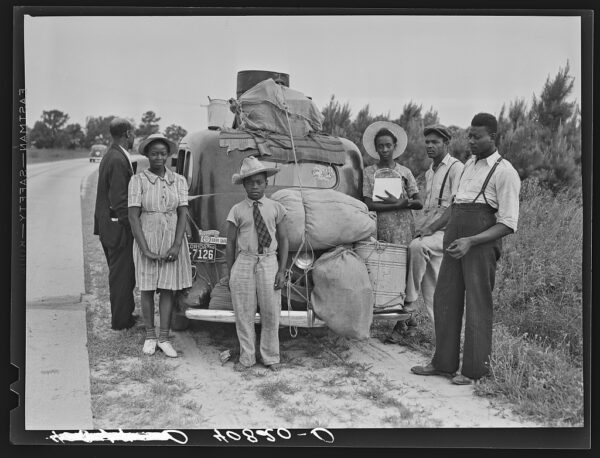
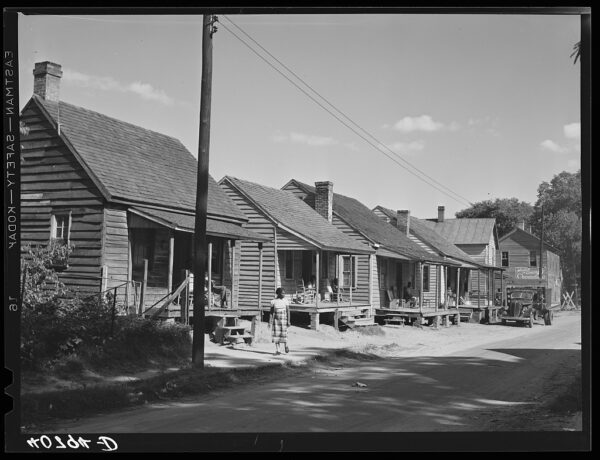
Beginning in the 1910s and continuing through the 1970s, the Great Migration was a transformative movement that profoundly reshaped both American society and African American culture. During this period, approximately six million African Americans left the rural South and relocated to urban centers in the North, Midwest, and West. They were driven by the hope of escaping racial violence and segregation, and by the promise of better economic, educational, and social opportunities.
Between World War I, the Immigration Act of 1924, and World War II, labor shortages in northern factories, foundries, and slaughterhouses created new openings for Black workers in non-agricultural industries. One influential publication, The Chicago Defender, founded by Robert S. Abbott, played a key role in encouraging this migration. The paper published train schedules, songs, and cartoons urging Black Southerners to leave the South in search of a better life in cities like Chicago. Other Black newspapers, such as New York City’s Amsterdam News and the Pittsburgh Courier, followed suit, offering advertisements for housing and jobs, as well as firsthand stories of success in the North.
While many African Americans found improved opportunities, they also encountered new forms of racism. Segregated housing and schools, discriminatory labor practices, and unequal pay were widespread in the North. Racial violence was not confined to the South; by 1930, the Ku Klux Klan had expanded its reach into every state and even into Panama. The Red Summer of 1919 underscored the growing racial tensions, as white communities, fearful of demographic shifts and perceived job competition, responded with violence and terror.
Despite these challenges, Black communities demonstrated remarkable resilience. They formed advocacy organizations such as the National Association for the Advancement of Colored People (NAACP), launched influential newspapers and magazines, and built cultural hubs like Harlem in New York City. These efforts not only provided support and solidarity but also laid the groundwork for future civil rights advancements.
The Great Migration sparked a vibrant exchange of ideas and the creation of new communities, reshaping the cultural landscape with the richness of African American experiences. Black women’s determined fight for suffrage expanded the national conversation on equality and opened doors to greater civic participation. Meanwhile, the NAACP’s legal victories and grassroots activism helped dismantle discriminatory laws, paving the way for lasting change. At the same time, the Harlem Renaissance illuminated the brilliance of African American art, literature, and music, challenging stereotypes and offering a deeper, more nuanced understanding of Black identity. Together, these movements ignited a powerful era of cultural and social transformation that continues to shape American history today.
Featured in