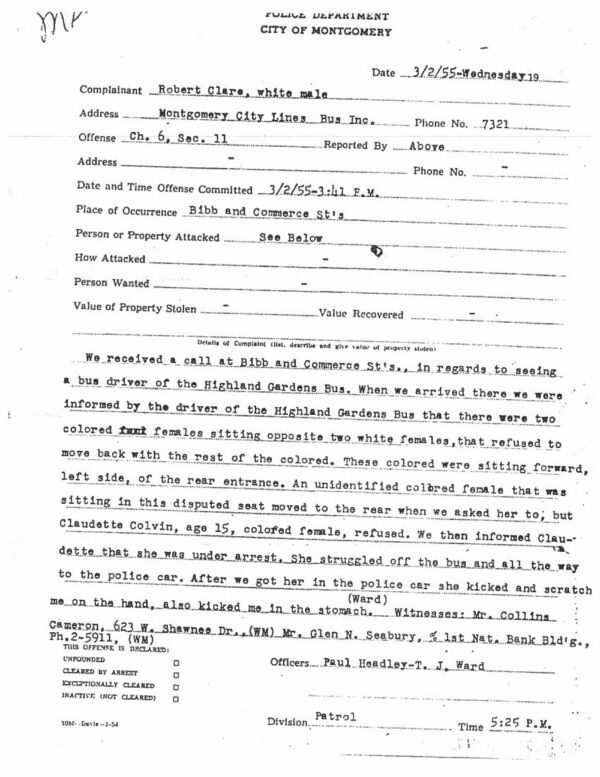
Hidden Heroes: Uncovering Claudette Colvin’s Role in Changing History
Explore the activism of youth civil rights leader, Claudette Colvin, and how she contributed to the advancement of the Civil Rights Movement.
Lesson Plan
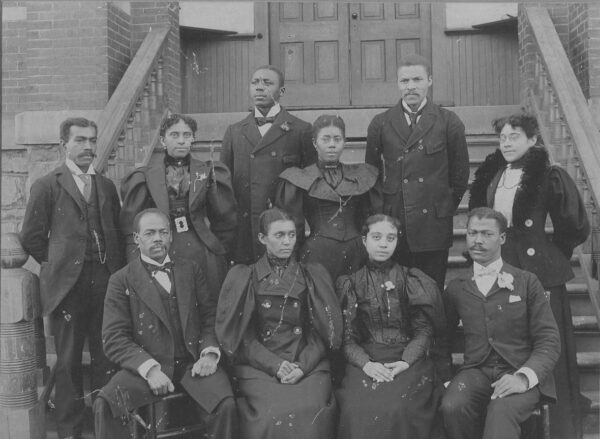
This lesson engages students with personal stories and firsthand narratives to foster empathy and a deeper understanding of the historical events of the 1906 Atlanta Race Massacre through primary sources.
This lesson plan centers on the 1906 Atlanta Race Massacre, a violent racial conflict that erupted in Atlanta, Georgia, deeply affecting the African American community and the city’s history. Students will explore this event through personal narratives, using firsthand accounts from survivors, witnesses, and contemporary news reports to gain a more intimate and humanized understanding of the tragedy. By examining these primary sources, students will not only learn about the historical context of racial violence and segregation in the early 20th century but also develop empathy for the individuals and communities who experienced these events firsthand, deepening their historical and social awareness.
Eighth
Social Studies
120 minutes
Two 60-minute class periods
Activities, Background Essay, Biographies, Glossary, Primary Sources, Rubric, Secondary Sources, Timeline
At the end of this lesson students will be able to:
It will be helpful for students to be familiar with:
SS8H6 Analyze the impact of Reconstruction on Georgia.
SS8H7 Evaluate key political, social, and economic changes that occurred in Georgia during the New South Era.
ELAGSE8RL1 Cite the textual evidence that most strongly supports an analysis of what the text says explicitly as well as inferences drawn from the text.
ELAGSE8RL4 Determine the meaning of words and phrases as they are used in a text, including figurative and connotative meanings; analyze the impact of specific word choices on meaning and tone, including analogies or allusions to other texts.
ELAGSE8RI1 Cite the textual evidence that most strongly supports an analysis of what the text says explicitly as well as inferences drawn from the text.
ELAGSE8RI8 Delineate and evaluate the argument and specific claims in a text, assessing whether the reasoning is sound and the evidence is relevant and sufficient; recognize when irrelevant evidence is introduced.
ELAGSE8W7 Conduct short research projects to answer a question (including a self-generated question), drawing on several sources and generating additional related, focused questions that allow for multiple avenues of exploration.
ELAGSE8SL4 Present claims and findings, emphasizing salient points in a focused, coherent manner with relevant evidence, sound valid reasoning, and well-chosen details; use appropriate eye contact, adequate volume, and clear pronunciation.
ELAGSE8L5 Demonstrate understanding of figurative language, word relationships, and nuances in word meanings.
LRHSS Determine the central ideas or information of a primary or secondary source; provide an accurate summary of the source distinct from prior knowledge or opinions.
LRHSS3 Identify key steps in a text’s description of a process related to history/social studies (e.g., how a bill becomes law, how interest rates are raised or lowered).
LRHSS4 Determine the meaning of words and phrases as they are used in a text, including vocabulary specific to domains related to history/social studies.
The nonpolitical rights of a citizen, especially the rights of personal liberty guaranteed to U.S. citizens by the 13th and 14th amendments to the Constitution and by acts of Congress.
Racial segregation and discrimination enforced by laws, customs, and practices in especially the southern states of the U.S. from the end of Reconstruction in 1877 until the mid-20th century.
Sign in
or
create a free account
to access the full lesson plan and more.
Explore the activism of youth civil rights leader, Claudette Colvin, and how she contributed to the advancement of the Civil Rights Movement.
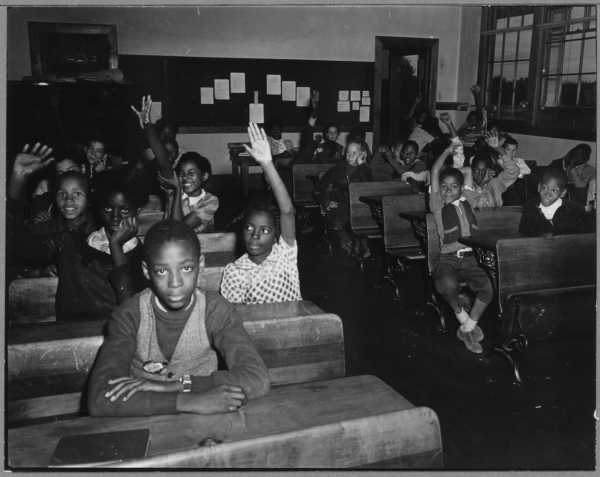
Students explore Investigation Stations to better understand the pivotal Brown v. Board of Education case that recognized the human and civil rights of all students by declaring school segregation unconstitutional.