Hidden Heroes: Uncovering Claudette Colvin’s Role in Changing History
Explore the activism of youth civil rights leader, Claudette Colvin, and how she contributed to the advancement of the Civil Rights Movement.
1939-1947
Claudette Colvin was raised by her great-aunt and great-uncle in Pine Level, Alabama. They later moved to Montgomery.
November 10, 1952
Jeremiah Reeves, a beloved 16-year-old high school student and classmate of Colvin’s, was arrested for allegedly assaulting a white woman. He was convicted and sentenced to death. This event helped spark Claudette’s commitment to social justice.
1954-1955
Claudette’s favorite teacher, Miss Geraldine Nesbitt, taught her to “read the world” through literature by examining social issues such as racism.
March 1955
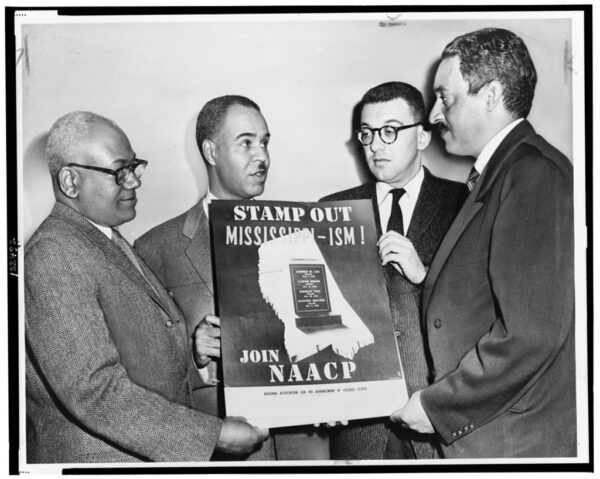
E.D. Nixon and Rosa Parks asked Claudette to join the Youth Council of the National Association for the Advancement of Colored People (NAACP). She became the Council secretary.
October 21, 1955
Mary Louise Smith, another teenager in Birmingham, refuses to move from her seat on a public city bus and is arrested.
Maay 6, 1955
Fred Gray appealed Claudette’s conviction to the Montgomery Circuit Court. The judge upheld the assault charge but dropped the other two. She was sentenced to probation.
December 1, 1955
Rosa Parks, an NAACP member in Birmingham, refused to move to the back of a public city bus to make room for white passengers. She was arrested and convicted of violating segregation laws, disturbing the peace, and assaulting a police officer.
December 1, 1955 - December 20, 1956
African Americans boycotted public city buses in Montgomery, AL, for 381 days in response to the arrest of Parks.
1956
Fred Gray files a case, known as Browder v. Gayle, challenging bus segregation in federal court in Alabama. Claudette is asked to serve as the youngest plaintiff in the case.
March 29, 1956
Claudette gives birth to a baby boy, Raymond.
May 11, 1956
The federal court case, Browder v. Gayle, began in Montgomery, Alabama. It was also the 159th consecutive day of the Montgomery Bus Boycott.
June 19, 1956
Three Alabama federal judges ruled in favor of the plaintiffs. Bus segregation was deemed unconstitutional. The case was appealed to the Supreme Court of the United States.
December 20, 1956
The Supreme Court of the United States upheld the verdict of Alabama’s federal court. Bus segregation was officially deemed unconstitutional at the national level.
July 2, 1964
U.S. legislation is passed that outlaws discrimination based on race, color, religion, sex, or national origin.
1957-1969
Claudette Colvin earns her GED, moves to New York, and becomes a nurse.
Featured in
Explore the activism of youth civil rights leader, Claudette Colvin, and how she contributed to the advancement of the Civil Rights Movement.