Hidden Heroes: Uncovering Claudette Colvin’s Role in Changing History
Explore the activism of youth civil rights leader, Claudette Colvin, and how she contributed to the advancement of the Civil Rights Movement.
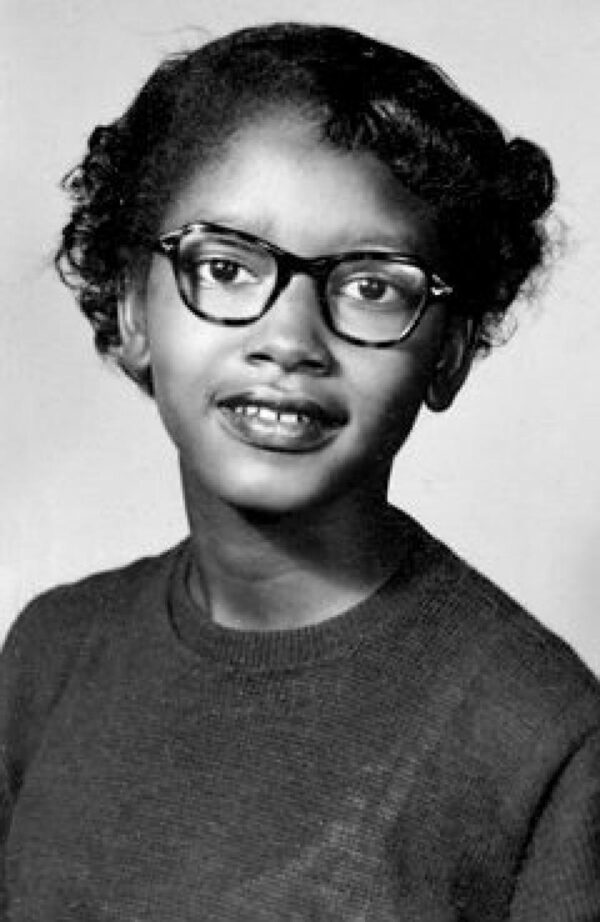
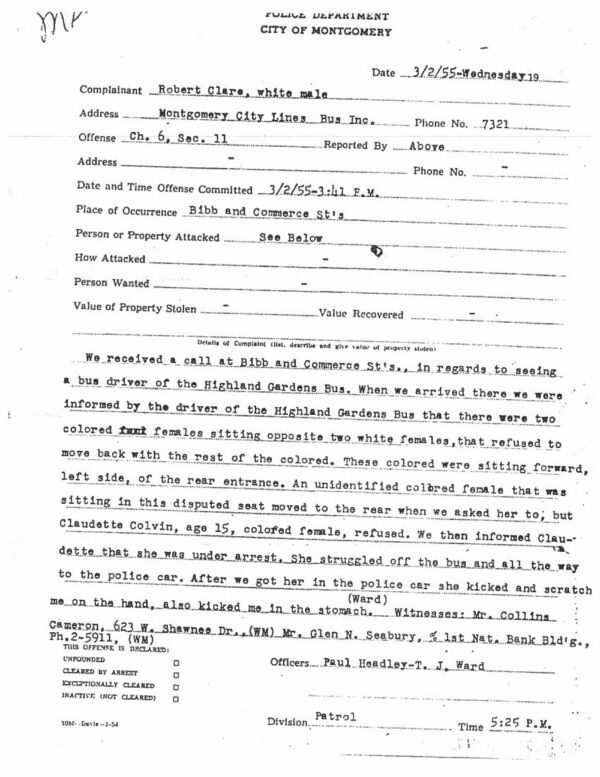
Nine months before Rosa Parks became a household name, a fifteen-year-old girl named Claudette Colvin made the same brave decision that would later catapult Parks to civil rights fame. On March 2, 1955, Colvin refused to give up her seat to a white passenger on a Montgomery city bus, declaring that it was her constitutional right to sit there. This act of defiance by a teenager would prove to be a pivotal moment in the Civil Rights Movement, though her contributions have often been overshadowed by the more famous figures who followed.
Claudette Colvin was born on September 5, 1939, in Montgomery, Alabama, during the height of Jim Crow segregation. Growing up in a society that systematically devalued Black lives, Colvin developed a strong sense of justice and resistance to inequality from an early age. Her commitment to social justice was particularly sparked by witnessing the arrest of her fellow classmate, Jeremiah Reeves, after he was badgered into making a false confession that he had assaulted a white woman. This traumatic experience of seeing injustice firsthand deepened her understanding of the systematic oppression facing Black Americans and strengthened her resolve to fight against it. Her involvement with the National Association for the Advancement of Colored People (NAACP) Youth Council played a crucial role in shaping her understanding of civil rights and her willingness to take action against injustice.
The NAACP Youth Council in Montgomery was more than just an extracurricular activity for young people like Colvin. Under the guidance of advisor Rosa Parks, the Youth Council served as a training ground for future civil rights activists. The organization educated young people about their constitutional rights, discussed strategies for challenging segregation, and prepared them for the realities of activism in the Jim Crow South. Colvin was an active member who took these lessons to heart, participating in discussions about bus segregation and the broader struggle for equality. She also served as the council’s secretary.
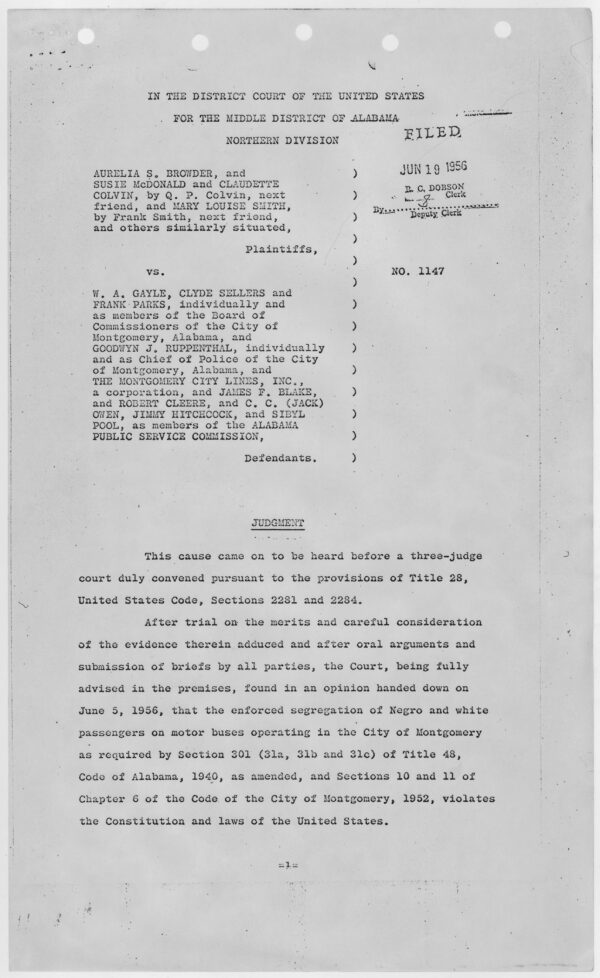
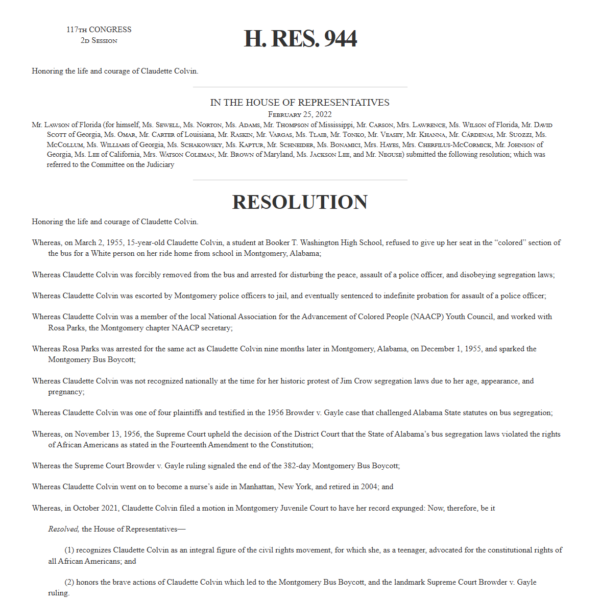
When Colvin refused to move from her seat on that March day in 1955, she was arrested and became one of the first people to challenge bus segregation laws in court. Most significantly, Colvin served as one of the four named plaintiffs in Browder v. Gayle, the landmark federal court case that ultimately declared Montgomery’s bus segregation laws unconstitutional. Alongside Aurelia Browder, Susie McDonald, and Mary Louise Smith, Colvin courageously put her name to a legal challenge that would change history. This legal victory preceded and reinforced the success of the Montgomery Bus Boycott that began later that year following Rosa Parks’ arrest.
Despite her significant contribution, civil rights leaders initially chose not to rally around Colvin’s case as they would later do with Parks. Several factors influenced this decision, including Colvin’s age, her pregnancy as an unmarried teenager, though she was not pregnant at the time of her arrest, and concerns about how the broader public might perceive her as a symbol of the movement. While these considerations reflected the strategic thinking of the time, they also meant that Colvin’s courage and sacrifice received far less recognition than they deserved.
Colvin’s impact on the civil rights movement extends beyond her individual act of resistance. Her work with the NAACP Youth Council helped lay the foundation for youth activism that would become crucial to the movement’s success. Young people trained in organizations like the Youth Council would go on to participate in sit-ins, freedom rides, and other forms of protest throughout the 1950s and 1960s.
Today, historians and civil rights scholars increasingly recognize Claudette Colvin’s essential role in the Montgomery bus protests and the broader struggle for racial equality. Her story reminds us that the Civil Rights Movement was built on the courage of many individuals, including teenagers willing to risk everything for justice. Through her work with the NAACP Youth Council and her brave stand on that Montgomery bus, Colvin helped lay the groundwork for the transformative changes to come, proving that age is no barrier to making history.
Featured in
Explore the activism of youth civil rights leader, Claudette Colvin, and how she contributed to the advancement of the Civil Rights Movement.