Hidden Heroes: Uncovering Claudette Colvin’s Role in Changing History
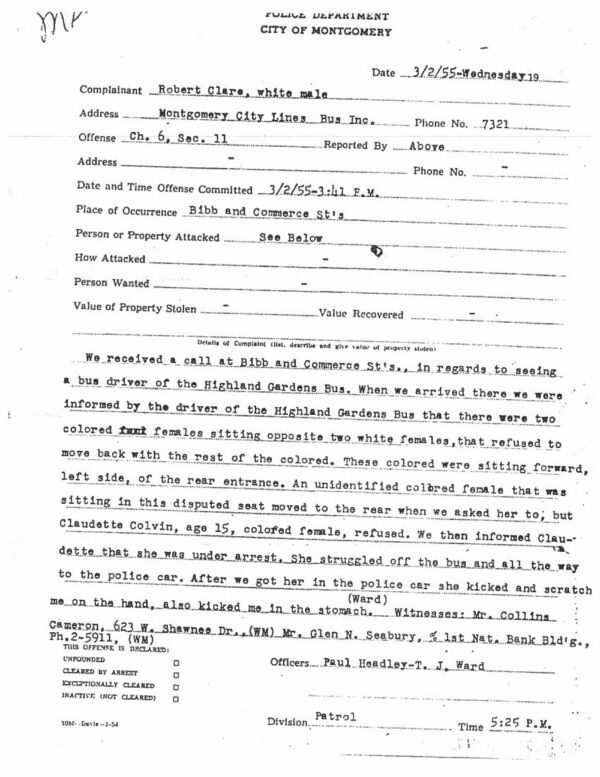
Explore the activism of youth civil rights leader, Claudette Colvin, and how she contributed to the advancement of the Civil Rights Movement.
Lesson Plan
In this lesson, students will take a deep dive into the motivations of Americans who participate in non-violent protests throughout history.
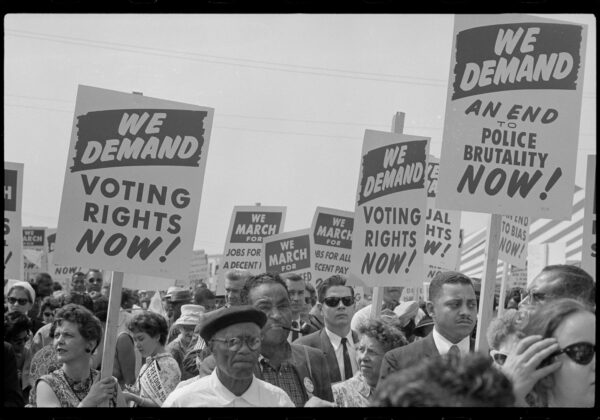
As residents of a democratic nation, all Americans have the right to make their voices heard. It can be difficult, however, to ensure your voice is heard if you are speaking alone. Collective action – action taken together by a group of people with a common objective, is one way to amplify your voice. The First Amendment protects American’s right to assemble with other people and express their views together. The 1963 March on Washington and the 2018 March for Our Lives are two examples we can examine to better understand what collective action is and why people choose to act.
Eleventh, Ninth, Tenth, Twelfth
Civics, Social Studies, US History
120 minutes
Two 60-minute class periods
Activities, Background Essay, Biographies, Glossary, Primary Sources, Rubric, Secondary Sources, Timeline
At the end of this lesson students will be able to:
It will be helpful for students to be familiar with:
Georgia
SSCG7: Demonstrate knowledge of civil liberties and civil rights.
SSCG16: Analyze the difference between involuntary and voluntary participation in civic life.
L9-10RHSS1: Cite specific textual evidence to support analysis of primary and secondary sources, attending to such features as the date and origin of the information.
L11-12RH1: Cite specific textual evidence to support analysi8s of primary and secondary sources, connecting insights gained from specific details to an understanding of the text as a whole.
The nonpolitical rights of a citizen, especially the rights of personal liberty guaranteed to U.S. citizens by the 13th and 14th amendments to the Constitution and by acts of Congress.
Action taken together by a group of people whose goal is to enhance their condition and achieve a common objective.
Sign in
or
create a free account
to access the full lesson plan and more.
Explore the activism of youth civil rights leader, Claudette Colvin, and how she contributed to the advancement of the Civil Rights Movement.
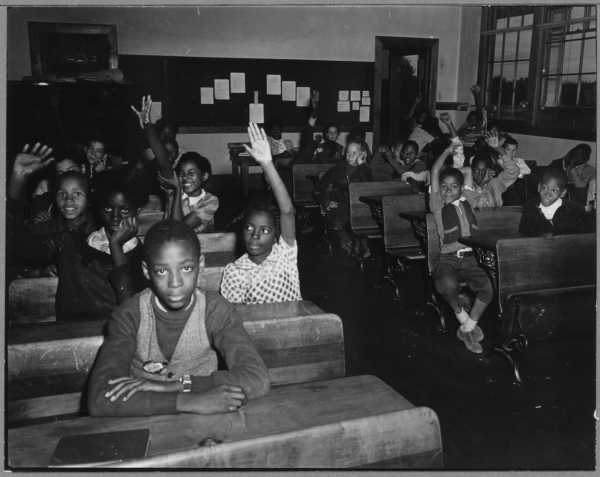
Students explore Investigation Stations to better understand the pivotal Brown v. Board of Education case that recognized the human and civil rights of all students by declaring school segregation unconstitutional.