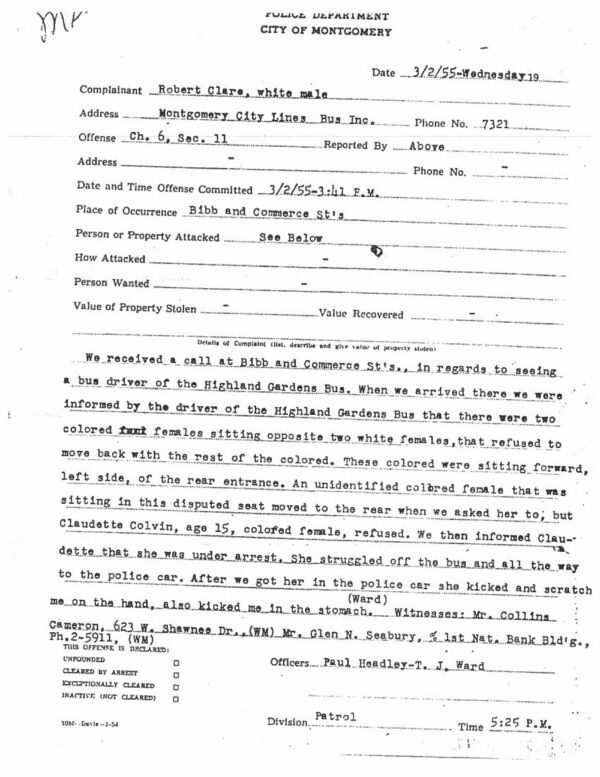
Hidden Heroes: Uncovering Claudette Colvin’s Role in Changing History
Explore the activism of youth civil rights leader, Claudette Colvin, and how she contributed to the advancement of the Civil Rights Movement.
Lesson Plan
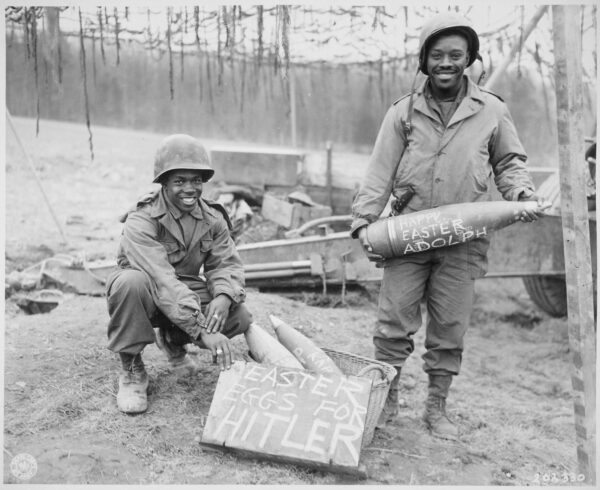
Explore how the experiences of African American soldiers during and after World War II impacted the development of the Civil Rights Movement of the 1950s and 1960s.
In this lesson, students will explore and compare the experiences of Black Soldiers during World War II. They will examine how these soldiers’ encounters in a predominantly ideological war against fascism influenced their perspectives, emotions, and subsequently, their motivation to advocate for societal transformation upon returning home. To achieve this, students will engage in various activities, including a photo analysis, the examination of editorial cartoons, and participation in a character corners discussion.
Eleventh, Tenth, Twelfth
US History
180 minutes
Three 60-minute class periods
Activities, Background Essay, Glossary, Primary Sources, Rubric, Secondary Sources, Timeline
At the end of this lesson students will be able to:
It will be helpful for students to be familiar with:
Georgia
SSWH18: Examine the major political and economic factors that shaped world societies between World War I and World War II.
SSWH19: Demonstrate an understanding of the global political, economic, and social impact of World War II.
SSCG12: Describe the tools used to carry out United States foreign policy, including diplomacy and treaties; economic, military, and humanitarian aid; and sanctions and military intervention.
SSUSH19: Examine the origins, major developments, and the domestic impact of World War II, including the growth of the federal government.
SSUSH20: Analyze U.S. international and domestic policies including their influences on technological advancements and social changes during the Truman and Eisenhower administrations.
SSUSH21: Analyze U.S. international and domestic policies including their influences on technological advancements and social changes during the Kennedy and Johnson administrations.
L9-10RHSS2: Determine the central ideas or information of a primary or secondary source; provide an accurate summary of how key events or ideas develop over the course of the text.
L9-10RHSS6: Compare the point of view of two or more authors for how they treat the same or similar topics, including which details they include and emphasize in their respective accounts.
L9-10RHSS9: Compare and contrast treatments of the same topic in several primary and secondary sources.
L11-12RHSS2: Determine the central ideas or information of a primary or secondary source; provide an accurate summary that makes clear the relationships among the key details and ideas.
L11-12RHSS6: Evaluate authors’ differing points of view on the same historical event or issue by assessing the authors’ claims, reasoning, and evidence.
L11-12RHSS9: Integrate information from diverse sources, both primary and secondary, into a coherent understanding of an idea or event, noting discrepancies among sources.
A comparison between two unlike things, one complex, the other more familiar.
Exaggerating or distorting a character’s features Exaggeration Distorting an object in shape or appearance.
Sign in
or
create a free account
to access the full lesson plan and more.
Explore the activism of youth civil rights leader, Claudette Colvin, and how she contributed to the advancement of the Civil Rights Movement.
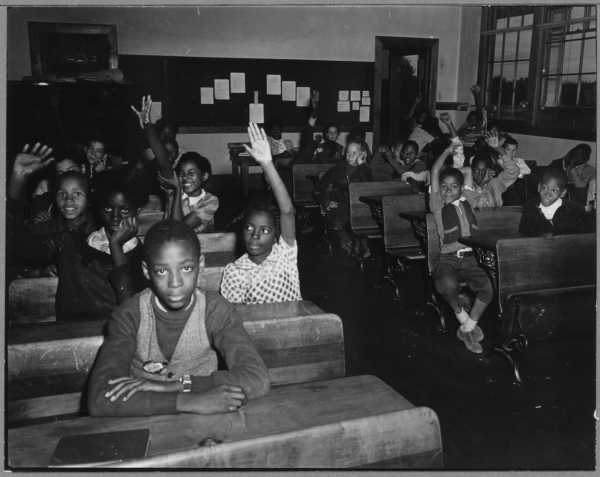
Students explore Investigation Stations to better understand the pivotal Brown v. Board of Education case that recognized the human and civil rights of all students by declaring school segregation unconstitutional.