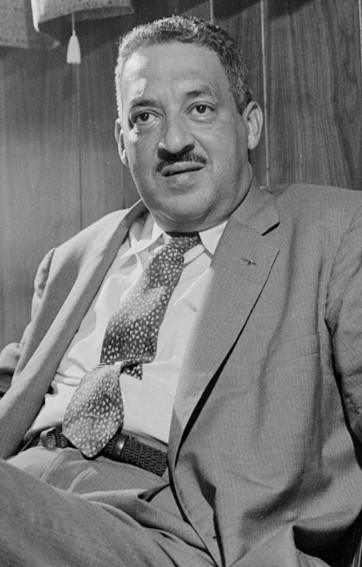
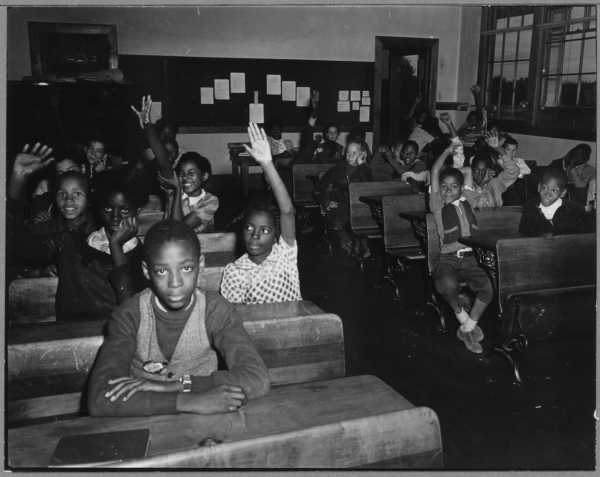
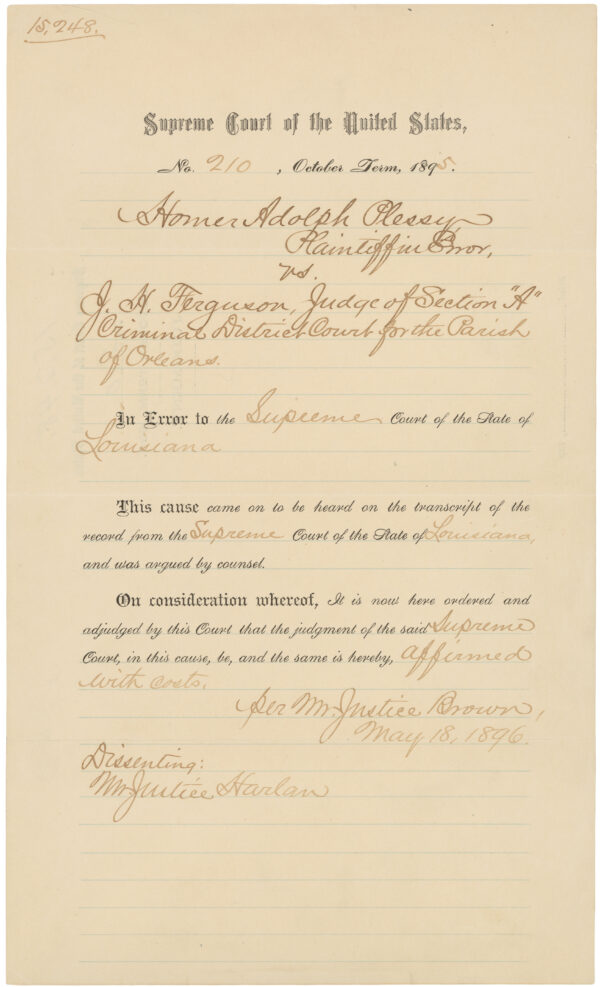
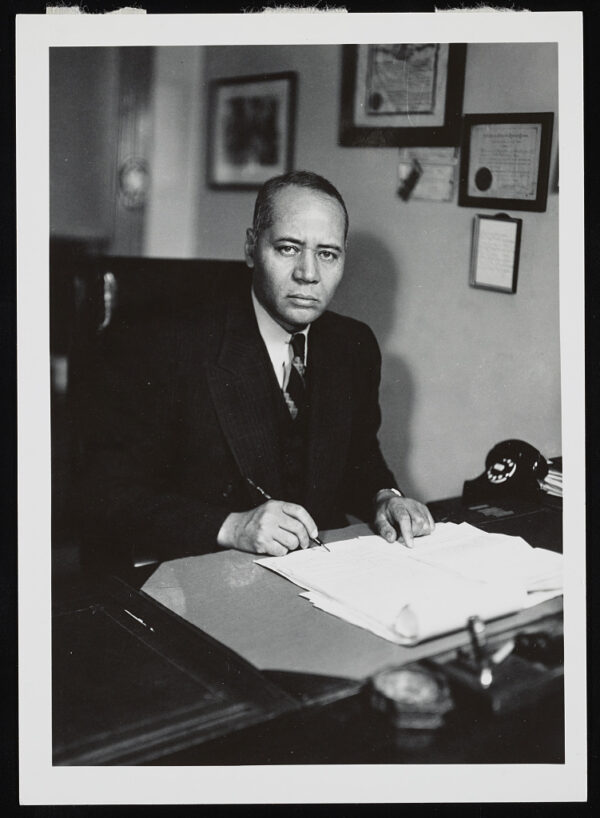
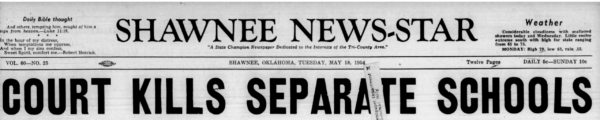
Thurgood Marshall was a lawyer, civil rights activist, and the first African American associate justice of the Supreme Court. As a lifelong champion of equality for minorities throughout the United States, Marshall began his career upon graduating from Howard University Law School at a private practice in Baltimore, MD, where he achieved his first legal victories arguing violations of the Fourteenth Amendment’s equal protection for an African American applicant to the University of Maryland. In 1936, Marshall became a staff lawyer at the NAACP under Charles Hamilton Houston. Over the next 20 years, Marshall won 29 out of the 32 cases he argued before the Supreme Court on behalf of the NAACP. Marshall’s most prominent victory was the 1954 decision in Brown v. Board of Education of Topeka, which led to the court overturning legal segregation established in the 1896 decision of Plessy v. Ferguson. President John F. Kennedy nominated Thurgood Marshall to the U.S. Court of Appeals in 1961, and President Lyndon B. Johnson named Marshall U.S. Solicitor General in 1965, then nominated him to the Supreme Court in 1967. Marshall was confirmed by the U.S. Senate (69-11) on August 30, 1967. While on the court, he ruled in favor of equitable treatment of minorities by state and federal governments.