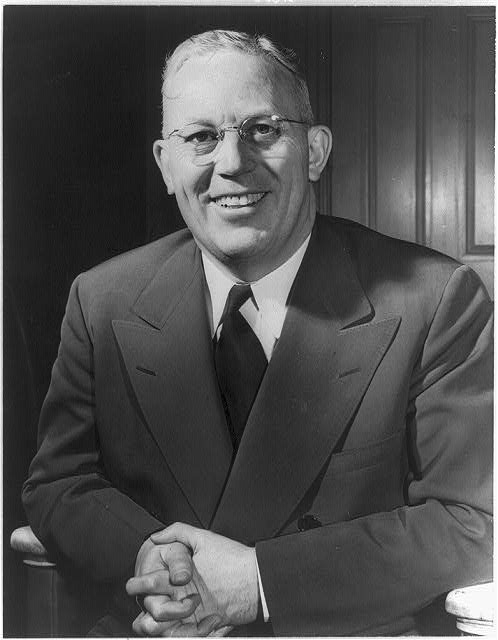
In 1896, the United States Supreme Court established the legal precedent for racial segregation in Plessy v. Ferguson. This decision, which stated that “separate but equal” public facilities were constitutional, remained the law of the land in the United States for over half a century until Thurgood Marshall of the NAACP brought the case of Oliver Brown, et al. v. Board of Education of Topeka, et al. (often shortened to Brown v. Board) before the Supreme Court. They successfully argued that separate can never be equal, particularly in schools. The Court’s unanimous decision on May 17, 1954 overturned Plessy v. Ferguson and declared segregation in public schools unconstitutional. As Chief Justice Earl Warren stated in the opinion, “We conclude that, in the field of public education, the doctrine of ‘separate but equal,’ has no place. Separate educational facilities are inherently unequal.”
Though Brown v. Board of Education was the seminal case to topple Plessy v. Ferguson, the NAACP’s Charles Hamilton Houston and Thurgood Marshall began implementing a legal strategy to end school segregation several years before, in 1935. Prominent cases that laid the groundwork for Brown v. Board included Pearson v. Murray (Maryland 1936), Missouri ex rel Gaines v. Canada (1938), Sweatt v. Painter (1950), and McLaurin v. Oklahoma Board of Regents of Higher Education (1950). These causes effectively convinced the courts that, in university graduate programs, separate was never equal, and racial discrimination in admissions was unconstitutional.
Segregation in Kansas schools was dependent on the area where you lived. In 1879 the Kansas legislature passed a law permitting first class cities, those with populations of 15,000 or more, to racially segregate elementary schools. For cities with smaller populations racially segregated schools were impermissible. The law stated:
“The board of education shall have power … to organize and maintain separate schools for the education of white and colored children, except in high school, where no discrimination shall be made on account of color.”
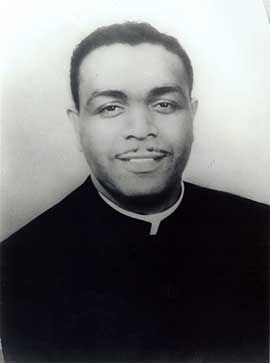
In 1948 McKinley Burnett, President of the Topeka NAACP began a campaign to persuade the local school board to electively desegregate their elementary schools. His efforts to persuade lasted for a two-year period from 1948 to 1950. When no progress was made, Burnett cautioned the local school board that the NAACP would take other measures to achieve desegregation. During the summer of 1950 he strategized with the organization’s legal redress committee comprised of Charles Scott, Jr., his brother John Scott, and attorney Charles Bledsoe. They planned to take legal action to test the constitutionality of the Kansas law.
In need of litigants the Topeka NAACP launched a campaign to recruit parents with elementary ages children to serve as plaintiffs. Burnett often convened meetings at the home of Lucinda Todd, former educator and secretary for the Topeka chapter of the NAACP. After the Topeka chapter wrote to the national NAACP leadership to share their plans, the NAACP Legal Defense Fund dispatched Jack Greenberg and Robert L. Carter to assist the local attorneys. By the fall of 1950 the Topeka NAACP had recruited thirteen families who would serve as plaintiffs in their lawsuit.
The namesake of the case, Oliver Brown, was personally recruited by attorney Charles Scott who was a childhood friend. Brown was reluctant to join at first. He was neither an activist nor a member of the NAACP. Additionally, he questioned whether there would be other men among the litigants. Brown, as well as the husbands of several of the female plaintiffs, worked union jobs where they were protected from the type of retaliation via employers seen elsewhere. Despite his misgivings, Brown became the only male plaintiff to join the efforts to challenge segregation in Topeka.
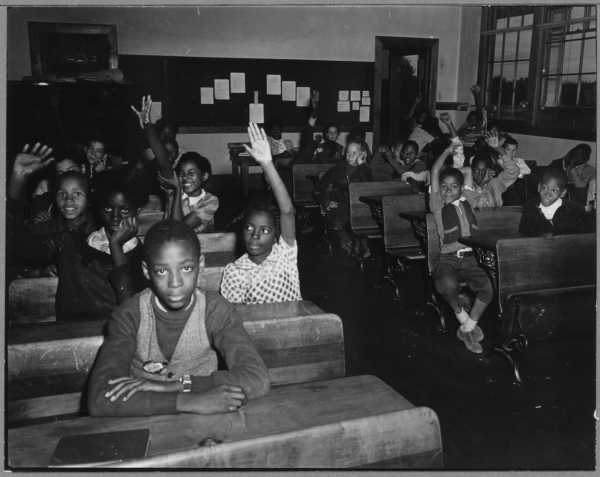
The NAACP instructed parents to first locate a segregated elementary school close to their home and attempt to enroll their child or children. In the fall of 1950, the thirteen parents followed these directives. For many of these families, the closest school to their home was a whites-only school. Vivian Scales could see the whites-only elementary school from her back porch and Oliver Brown only had to walk four blocks to the school where he attempted to enroll his daughter Linda. In contrast, the segregated schools that Ruth Ann Scales and Linda Brown were assigned to were over ten blocks away from their homes.
Each school refused the students’ enrollment, which gave the NAACP the documentation necessary to file their class action lawsuit against the Topeka Board of Education. On February 28, 1951 their case was filed as Oliver L. Brown et al vs the Board of Education of Topeka. It is believed that Oliver Brown, the only man on the roster of plaintiffs, was listed as the lead plaintiff due to his gender.
The U.S. District Court ruled against the plaintiffs, holding that segregation was not unlawful even if it was harmful, citing the precedent of Plessy v. Ferguson (1896). In 1952, the plaintiffs appealed to the U.S. Supreme Court, where the NAACP consolidated the Topeka case with four similar lawsuits under the title Oliver L. Brown et al. v. Board of Education of Topeka et al.
At the time, Thurgood Marshall served as chief counsel for the NAACP. He argued that segregated schools for Black and white children were inherently unequal and violated the Equal Protection Clause of the 14th Amendment. He further maintained that segregation fostered a sense of inferiority among Black children.
The Supreme Court first heard arguments in the spring of 1953 but delayed a decision, requesting a rehearing to focus on whether the Equal Protection Clause prohibited racial segregation in public schools. On May 17, 1954, Chief Justice Warren delivered the landmark opinion declaring that racial segregation in public schools was unconstitutional. He stated:
“Segregation of white and colored children in public schools has a detrimental effect upon the colored children. The impact is greater when it has the sanction of the law, for the policy of separating the races is usually interpreted as denoting the inferiority of the Negro group. A sense of inferiority affects the motivation of a child to learn … We conclude that, in the field of public education, the doctrine of ‘separate but equal’ has no place. Separate educational facilities are inherently unequal. Therefore, we hold that the plaintiffs and others similarly situated for whom the actions have been brought are, by reason of the segregation complained of, deprived of the equal protection of the laws guaranteed by the Fourteenth Amendment.”
Despite the ruling in Brown v. Board of Education, a resistance movement led by U.S. Senator Harry F. Byrd, Sr. and Arkansas Governor Orval Faubus worked to prevent the integration of public schools. Infamously, Governor Faubus sought to block Black students from entering Little Rock Central High School in 1957, even dispatching the National Guard to keep them out of school. President Dwight D. Eisenhower intervened and enforced the court’s ruling on behalf of the Little Rock Nine. Faubus responded by closing all of Little Rock’s public high schools from 1958 to 1959.
Following Faubus’ lead, other Southern cities implemented “school choice” programs that subsidized the tuition of white students to attend private, segregated schools, which continued until the late 1960s. Eventually, in 1976, the Supreme Court issued another milestone ruling in Runyon v. McCrary, stating that denying admission to students on the basis of race in private schools violated federal civil rights laws.
Despite resistance, Brown v. Board of Education is widely regarded as the landmark civil rights case that dismantled the legal segregation established by Plessy v. Ferguson. One year after the ruling, Rosa Parks’s refusal to give up her seat on a Montgomery bus sparked the Montgomery Bus Boycott. By overturning the “separate but equal” doctrine, the Court’s decision in Brown v. Board of Education of Topeka established a legal precedent that would be used to strike down segregation laws in other public facilities.